A regional initiative to strengthen evidence-based measurement of poverty and multidimensional vulnerability across CARICOM.
Objectives of the Project
General Objective
The general objective of the Project is the development of institutional capacity across the participating countries by supporting the development of a statistical framework to measure poverty and other vulnerability dimensions through collaborative work.
Specific Objectives
The specific objectives are to develop: (i) a harmonized data collection instrument for measuring vulnerability in CARICOM in the economic, social and environmental dimensions of sustainable development; (ii) regional knowledge products and methodological guidelines for administering the harmonized instrument; and (iii) training modules for administering multipurpose surveys for measuring vulnerability.

Expected Results
COMPONENT 1- Harmonised Data Collection Instrument
Development and implementation by Member States of harmonised survey instruments to measure and assess vulnerability. This would include harmonised questionnaire in CAPI (Computer Assisted Personal Interviewing) form, interviewers’ manual and tabulation plan.
COMPONENT 2- Regional Knowledge Products and Methodological Guidelines
Development of the data infrastructure and technical capacity to implement the harmonised instrument on a continuous and consistent basis. This would include manual, methodological guidelines, fact sheets and reports.
COMPONENT 3- Training Modules/Workshops
Improved capacity of CARICOM Member States in measuring and assessing vulnerability and poverty, their multidimensional characteristics and intersectionality with other social, economic and environmental conditions. This would include digitised training material
Participant Countries
The Bahamas
Belize
Guyana
Trinidad and Tobago
Project Ends: May 2028

Overview
What is the project about?
This project aims to develop a Statistical Framework to Measure Vulnerability in CARICOM. The framework will help countries collect, analyze, and use data to better understand poverty and multiple forms of vulnerability, supporting evidence-based policymaking and sustainable development.
Why is this project important?
Caribbean societies face a range of interconnected challenges, including climate-related disasters, social inequalities, poverty, health risks, and economic vulnerabilities. These factors often overlap, making certain populations more susceptible to harm during crises. The project seeks to provide better data and tools to identify and address these vulnerabilities.
Who is leading the project?
The project is being executed by the CARICOM Secretariat, with leadership from its Regional Statistics Programme and support from several internal units, including Procurement, Finance, Resource Mobilization and Technical Cooperation, and the Programme Support Unit.
Understanding Vulnerability
What is vulnerability?
Vulnerability refers to conditions resulting from physical, social, economic, and environmental factors that increase the likelihood that individuals, communities, assets, or systems will be adversely affected by hazards.
Who are considered vulnerable populations?
Examples of vulnerable populations include:
- Children and adolescents
- Older adults
- People experiencing homelessness
- Persons with disabilities (physical, cognitive, or mental health)
- Pregnant individuals
- Refugees and immigrants
These groups often face higher risks of poor health outcomes, reduced access to resources, and increased exposure to harm.
What drives vulnerability?
Vulnerability is rarely caused by a single factor. It typically results from overlapping:
- Social challenges
- Economic hardships
- Health conditions
- Environmental risks
Understanding these drivers is essential for developing equitable policies and targeted interventions.
Project Objectives
What is the project’s general objective?
The general objective is to strengthen institutional capacity in participating countries through the development of a statistical framework that measures poverty and other dimensions of vulnerability using a collaborative regional approach.
What are the specific objectives?
The project will create a comprehensive suite of tools and resources, including:
- A harmonised data collection instrument
- Regional knowledge products
- Training modules
These resources will support the consistent measurement of poverty and vulnerability across the region.
Project Components
What are the main components of the project?
Component 1: Harmonised Data Collection Instrument
This component includes:
- Review of existing household surveys and international standards
- Development of a harmonised questionnaire
- CAPI (Computer-Assisted Personal Interviewing) programming
- Development of interviewer manuals
- Creation of tabulation plans with demographic disaggregation
Component 2: Regional Knowledge Products and Methodological Guidelines
This component focuses on:
- Guidelines for survey administration
- Sampling methodologies
- Data collection procedures
- Quality assurance standards
- Ethical considerations
- Reports, manuals, fact sheets, and related knowledge products
Component 3: Training Modules and Workshops
Activities include:
- Designing training materials
- Developing supporting learning resources
- Conducting workshops and webinars
- Building technical capacity among stakeholders
Expected Outputs and Benefits
What are the key deliverables?
The project will produce:
- A harmonised regional survey instrument
- CAPI-based questions
- Interviewers’ manuals
- Tabulation plans
- Methodological guidelines
- Fact sheets and reporting templates
- Digitised training materials
How will CARICOM countries benefit?
Benefits include:
- Better identification of vulnerable populations
- Improved resource allocation
- Enhanced policy design and evaluation
- Stronger monitoring of adaptation and resilience strategies
- More targeted financing mechanisms
- Strengthened national statistical systems
Will the project benefit countries outside CARICOM?
Yes. The framework and related products may also support other Small Island Developing States (SIDS) facing similar social, economic, and environmental challenges.
Geographic Coverage and Beneficiaries
Which countries are directly participating?
The direct participant countries are:
- The Bahamas
- Belize
- Guyana
- Trinidad and Tobago
Will other CARICOM countries benefit?
Yes. While four countries are directly involved in project implementation activities, the resulting tools, methodologies, and knowledge products are intended to benefit all CARICOM Member States and Associate Members.
Partners and Stakeholders
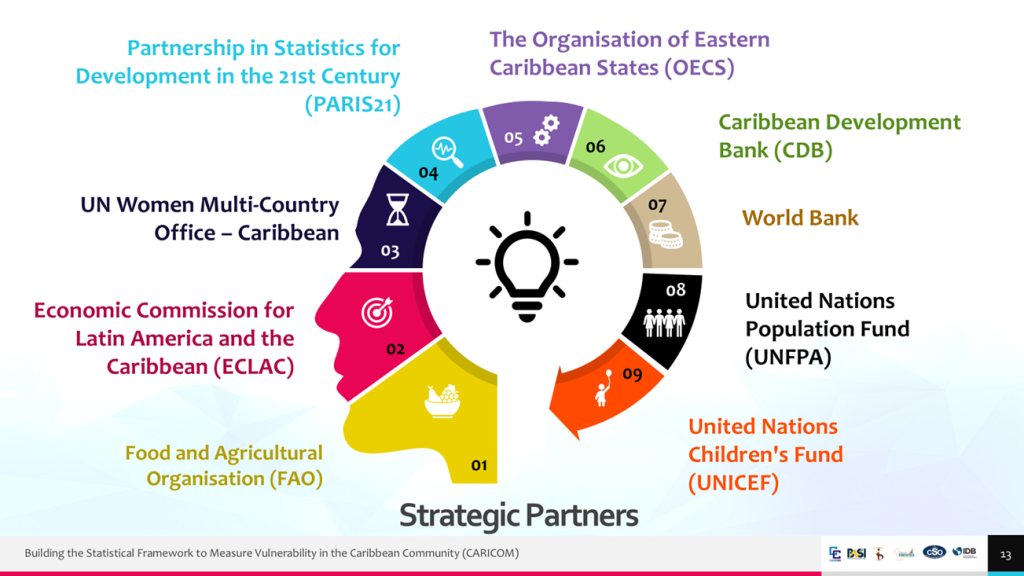
Who are the project’s strategic partners?
Key partners include:
- World Bank
- UNICEF
- FAO
- PARIS21
- ECLAC
- Caribbean Development Bank (CDB)
- UN Women Multi-Country Office – Caribbean
- UNFPA
- Organisation of Eastern Caribbean States (OECS) Commission
Project Progress
When was the project launched?
The project was formally launched in November 2025, marking the beginning of implementation activities and stakeholder collaboration.
What progress has been made so far?
Key milestones include:
- Formal project launch (November 2025)
- Strong stakeholder interest and ongoing consultations
- Request for Expressions of Interest issued (March 2026)
- Receipt of Expressions of Interest for Component I
- Development of a shortlist of qualified firms and institutions
What is the current focus?
Current efforts are focused on procurement activities and the selection of qualified firms to undertake diagnostic assessments and develop the harmonised vulnerability measurement instruments and associated tools.
Looking Ahead
What long-term impact is expected from the project?
The project is expected to:
- Improve measurement of multidimensional vulnerability and poverty
- Strengthen evidence-based policymaking
- Support climate resilience initiatives
- Advance Sustainable Development Goals
- Enhance regional cooperation in statistics and data systems
- Build stronger institutions capable of monitoring social, economic, and environmental vulnerabilities
How does the project support regional and global development agendas?
The project aligns with:
- The CARICOM Regional Agenda
- The Multidimensional Vulnerability Index (MVI) initiative
- The Antigua and Barbuda Agenda for SIDS (ABAS)
- The Regional Framework for Achieving Development Resilient to Climate Change (2019–2029)
- The 2030 Agenda for Sustainable Development